Discovering Bayeux
Capital of Bessin, located just a few kilometers from the D-Day beaches, Bayeux was the first city liberated by Operation Overlord and remains one of the few in Normandy to have been spared the ravages of the Battle of Normandy.
Bayeux has retained its rich architectural and cultural heritage, a testament to the loyalty to its history, dedication to preservation, and the courage demonstrated by its inhabitants in crucial moments of history.

GalLO Roman Era
Former capital of the Badiocassi, a Gaulish people, the city has preserved the main axis from this period, now the rue Saint-Malo, as a bustling thoroughfare.
The Hôtel d'Auxais, built upon Gallo-Roman remains and the castle ramparts, bears witness to its rich historical heritage. A mysterious legend suggests that secret underground passages once allowed an elegant horseback journey to the cathedral, adding a unique dimension to the hotel's elegance and turning each stone into a tangible testimony of the past and its myths.
Late Antiquity
In the late 3rd century, the city, concerned about its preservation against invasions, fortified itself with protective walls, which were later destroyed in the 18th century. Within these ramparts, the majestic cathedral stood at the southeast corner, and the medieval castle occupied the southwest corner, now home to Place De Gaulle.
Some traces of this fortification still remain, one of which is revealed at the back of the garden of the Hôtel d'Auxais, built around a former square watchtower. This invites us to appreciate the tangible connection between the present and the city's rich past.


Norman Period
In 890, Vikings led by Rollo captured the city of Bayeux despite the resistance of Count Bérenger II of Neustria. Poppa of Bayeux, daughter of Bérenger II, became the wife of Rollo, sealing a complex alliance.
In the 10th century, under Bothon, Bayeux rose from the ashes after being destroyed by the Vikings. In 1050, the marriage of William, Duke of Normandy, to Matilda of Flanders, transformed the region into a powerful duchy. In 1066, after his victory at Hastings, William the Conqueror seized England's throne. In 1204, King Philip Augustus integrated Normandy into the royal domain, marking a new era for Bayeux.
World War II
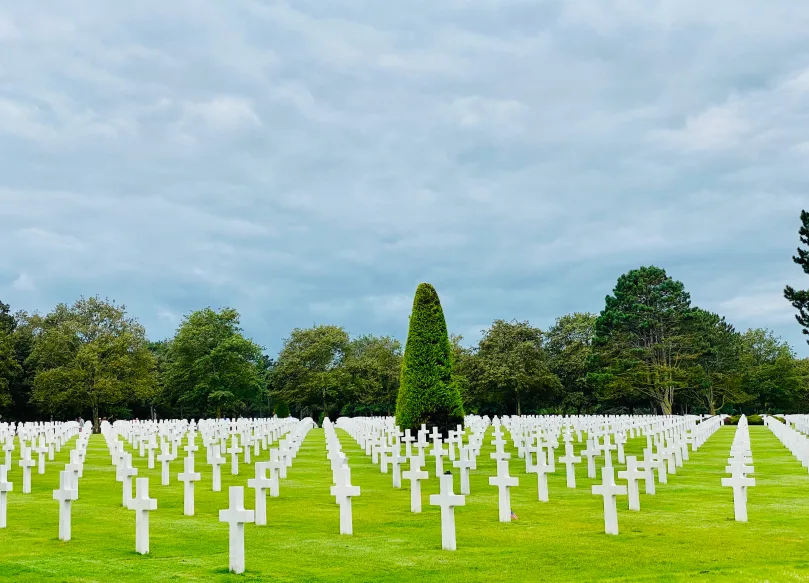
Occupied in 1940, Bayeux was liberated on June 7, 1944, by British forces, becoming the first liberated city in France during World War II. Spared from bombings, it transformed into a center for care and recovery. On June 14, General de Gaulle traversed the city, greeted by crowds. Monuments, including the largest British cemetery in France, commemorate this period. De Gaulle returned in 1946 to inaugurate a memorial, laying the foundation for the 1958 Constitution.

Unveiling the Past
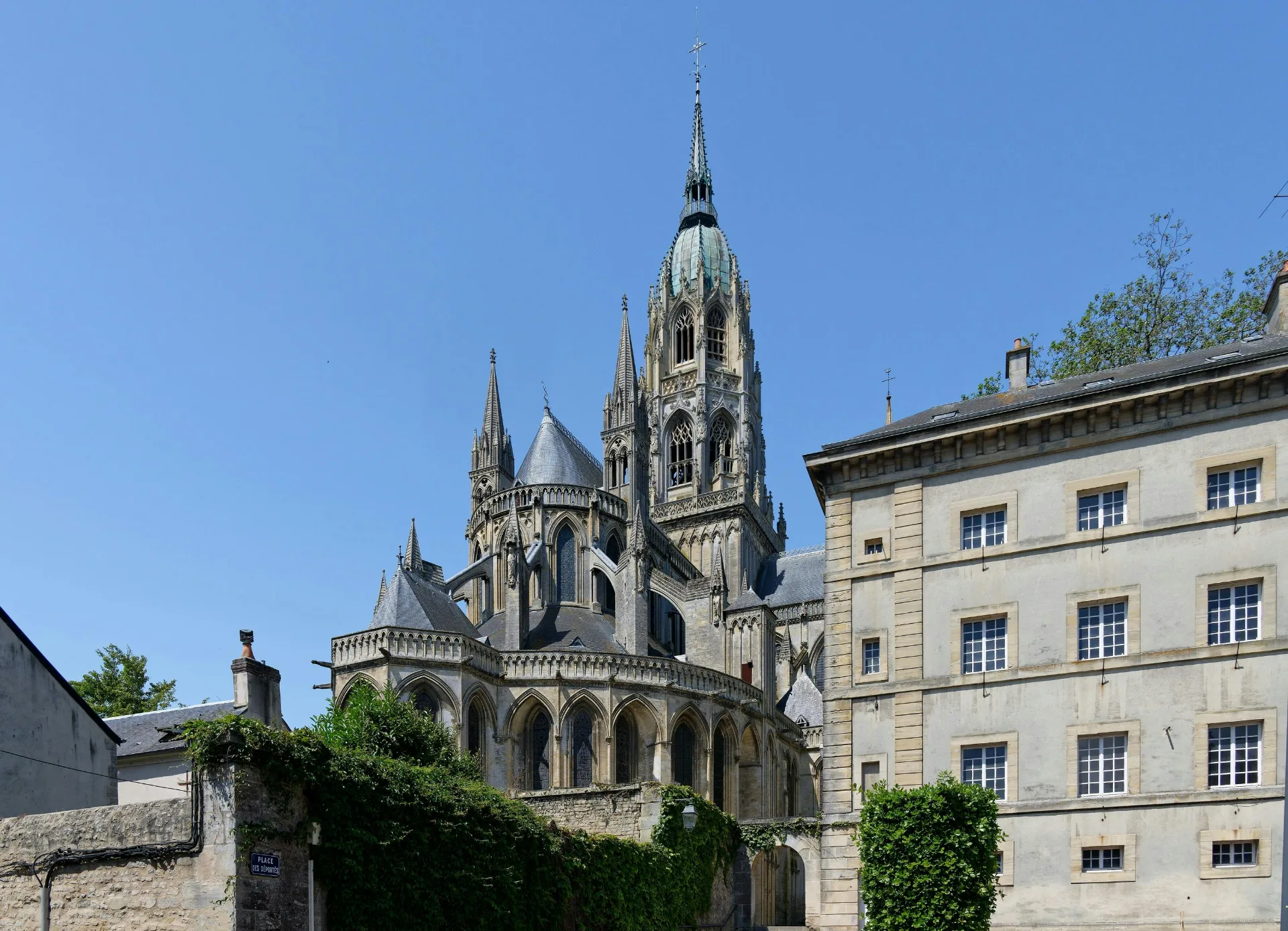



"If my health were to improve, and if my parents allowed, not necessarily to stay in Balbec, but at least to experience, for once, the architecture and landscapes of Normandy or Brittany, that one hour and twenty-two minutes train ride I had taken so many times in my imagination, I would have wanted to stop in the most beautiful cities. But in vain did I compare them; how could I choose between them, like individual beings, each unique and irreplaceable, between Bayeux, with its towering noble reddish lace and its peak illuminated by the old gold of its last syllable?"
— Marcel Proust, Swann's Way
The Legacy of the Auxais Family
One of the oldest noble families of the Cotentin, the d'Auxais are recorded from 1150, when Thomas d'Auxais was lord of the estate that bears their name, raised to a county in 1610. Family tradition reaches back further still, to a Raoul d'Auxais said to have followed William the Conqueror in 1066.
During the Hundred Years' War, the family stayed loyal to the French crown. In 1418 the English declared Pierre d'Auxais a rebel and seized his lands. The lord of Aussay, the period spelling of Auxais, stood among the 119 knights who held Mont Saint-Michel, the only Norman stronghold never taken by the English; his name is still inscribed in the abbey church. From 1429 to 1461, Briant d'Auxais distinguished himself as one of the finest captains of King Charles VII.
In 1800, Jean-Philippe d'Auxais wrote a memoir so critical of the revolutionary calendar and taxes that the first prefect of the Manche, who had dared to circulate it, was promptly dismissed. Built in the 17th century and enlarged in the 18th, the Hôtel d'Auxais carries this name into the heart of Bayeux.

De sable à trois besans d'argent
Barbara, a chief stewardess, and Franck, airline pilot, are passionate about exploring the world. Their aerial adventures have forged a deep connection between sky and earth, blending dreams with reality.
Franck's flights have revealed breathtaking landscapes and interconnected cultures, sparking his love for diversity and historical richness. As a stewardess, Barbara brings hospitality to new heights, drawing on her global experiences to offer travelers comfort and cultural insights.
Now in Bayeux, they've embarked on restoring the historic Hôtel d'Auxais, aiming to create a space where stories merge, cultures mingle, and guests become part of a modern epic.
Join Franck and Barbara on this journey to explore the history and charm of Bayeux from their unique home base.
Welcome on board.

ACTIVITIEs
Feel free to reach out to us for any inquiries or to plan your stay at the historic Auxais mansion. Our team is here to assist and ensure you have a memorable experience in the heart of Bayeux.